
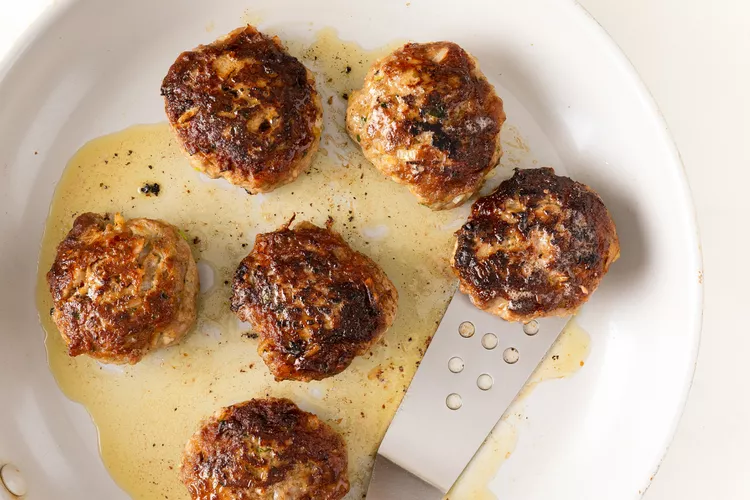
Frikadellen—also known as Bouletten, Bulette, Bratklops, Fleischklops and, well, many other names—are, simply put, German meatballs. They’re mainly eaten as a quick bite from butcher shop lunch counters or Imbisse, German snack food stalls, in a bread roll with plenty of mustard.
The spices and name may vary from region to region, but they all have one thing in common: a large, relatively flat shape. Their shape makes them different from other meatballs around the world and, in my humble opinion, makes them less fussy to form and fry since they have two distinct sides and can (like a hamburger) be easily flipped. This also gives them a wide surface area for frying, allowing both sides to get a deeply browned, crisp crust.
Forming Frikadellen
Forming German meatballs is relatively relaxed and doesn’t require any tools other than your two hands. They’re bigger than your average Italian meatball, at least the size of your palm (sometimes slightly larger) and about 1 to 1 1/2 inches thick.
To form them, use slightly damp hands to prevent too much sticking, then grab a handful of meat and form it into a rough ball, passing it firmly but gently between your palms to both pack the meat together more tightly and naturally form the distinctive patty shape; here’s a helpful visual example for reference.
Easy Tweaks
German Frikadellen are easy to make and don’t call for many ingredients that are hard to find. That being said, you can easily adjust the recipe based on what you have on hand, and you can always add more in the way of herbs and spices. Here are some options inspired by regional German variations of Frikadellen:
It’s common in Germany to find ground beef and ground pork already mixed and ready to buy at the supermarket, but you could use just beef or just pork if you prefer here. If using beef only, choose 80/20 so it’s not too lean.
If you don’t love the sharp bite of raw onion in your meatballs, you can also sauté the minced onion in a frying pan with a little clarified butter first, while the bread is soaking. Let it cool slightly, then add to the mixture.
The recipe below includes the bare minimum in terms of herbs and spices for Frikadellen—many other recipes call for dried or fresh marjoram, a pinch of nutmeg, paprika, grated, minced, or granulated garlic, and/or caraway, so any of these would be great to add.
If you can’t find clarified butter or ghee to fry the meatballs in, you could use margarine or vegetable oil. They won’t be quite the same, as clarified butter does add a delicious buttery rich flavor, but they will still be tasty!
What To Serve Them With
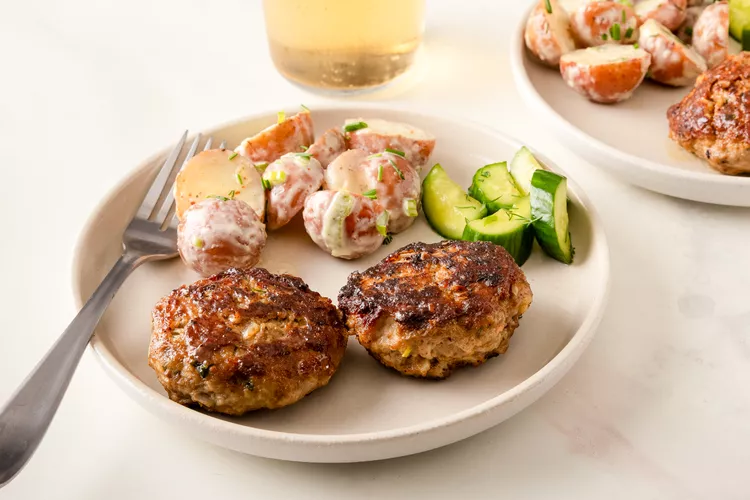
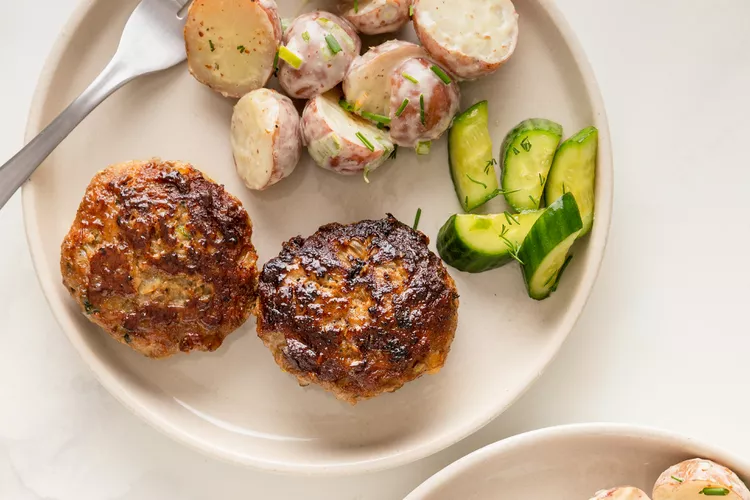
Frikadellen are typically eaten in a bread roll with German mustard as a snack, but as a meal they can be served in any number of ways with just about any side you like. To keep it traditional and remain within the sphere of German cuisine, think cucumber salad, potatoes of any kind (potato salad, boiled or baked, fried, mashed, scalloped), cabbage, or roasted vegetables like carrots, asparagus, or broccoli.
Ingredients
2 1/4 ounces cubed, stale white sandwich bread (about 2 slices)
4 tablespoons milk or water
1/2 pound ground beef
1/2 pound ground pork
1 large egg
1/2 cup finely chopped white or yellow onion
1 tablespoon minced fresh fresh parsley, optional
2 teaspoons German mittelscharf or Dijon mustard
1/2 teaspoon kosher salt, plus more to taste
1/2 teaspoon freshly cracked black pepper, plus more to taste
3 tablespoons clarified butter or ghee
Method
Soak the bread:
Add the cubed bread to a large bowl with the milk or water and mix to combine. Let sit for 5 to 10 minutes; use this time to prep the other ingredients.
Mix and form:
Once the bread is soaked and very soft, add the beef, pork, egg, onion, parsley (if using), mustard, salt, and pepper. Use your hands to mix the mixture very well, kneading it and making sure everything is evenly distributed. We’re not going for a soft, fall apart meatball here, so mix it well.
Use your hand to press the top of the mixture flat in the bowl, then use the side of your hand to roughly draw a cross into the mixture so you have four even quadrants; you should get 2 meatballs from each quadrant.
Use slightly damp hands to grab a handful of meat and form it into a rough ball, passing it firmly but gently between your palms to both pack the meat together more tightly and naturally form the distinctive patty shape; here’s a helpful visual example for reference.
Fry:
Heat a large frying pan or skillet (I like cast iron here) with the clarified butter over medium heat. Add as many meatballs as can fit easily in the pan, not crowding them in too much as this will prevent that crisp crust from forming. I can cook 4 at a time in a 10-inch cast iron skillet.
Let them cook on the first side until deeply browned, at least 6 minutes. Flip the Frikadellen and let cook until deeply browned on the other side, another 5 to 6 minutes. Once deeply browned on both sides and cooked through (use a thermometer to check doneness or cut one in half to ensure no pink remains inside), remove to a plate and cook the next batch.
Serve:
Once all the Frikadellen are cooked through, serve as desired with plenty of mustard and your favorite sides.
Frikadellen are perfect candidates to make ahead, store, and reheat. Many Germans will even eat them cold, straight from the fridge!
Let the cooked Frikadellen cool completely to room temperature, then store in an airtight container or wrapped tightly in plastic or aluminum foil in the fridge for up to 5 days.
To reheat, microwave, covered, until hot all the way through or bake, covered, in a preheated 400°F until hot all the way through. You can also pan-fry them in a hot frying pan with a little bit more clarified butter, flipping often until hot all the way through.